

Protecting and enabling free expression for all

The Campaign for Free Expression (CFE) is a non-profit organisation dedicated to protecting and expanding the right to free expression for ALL, and enabling EVERYONE to exercise this right in full, whether it be by speaking out, by protesting, by revealing information, by blowing the whistle on wrong-doing, by arguing, debating, writing, painting, composing or just by shouting out an opinion.
Stay up to date
Publications
Submission to the Special Rapporteur on the promotion and protection of the right to freedom of opinion and expression
The Campaign for Free Expression (CFE) thanks the Special Rapporteur for the opportunity to contribute to the 2027 vision-setting report and the mandate’s strategic priorities for 2026–2029. CFE is a South African civil society organisation working on freedom of expression, access to information and media freedom. This submission follows the four sections of the questionnaire but is deliberately narrow. It addresses South Africa only, and draws on what CFE has itself done: our litigation, our submissions to Parliament, our research and our published commentary.
Programmes
Political State, Freedom of Expression and Media Freedom in Botswana
Botswana achieved independence from Britain in 1966 and has long been regarded as one of Africa’s most stable democracies. For nearly six decades, however, that stability rested on single-party dominance: the Botswana Democratic Party (BDP) governed without interruption from independence until October 2024, when it suffered a historic defeat. The opposition Umbrella for Democratic Change (UDC) won a majority in the National Assembly, and UDC leader Duma Boko was inaugurated as president in November 2024, the first non-BDP head of state in the country’s history.
The transition was both a democratic achievement and a reminder of how deeply single-party rule had shaped the country’s institutions. State media have long exhibited pro-government bias, and many bodies have historically answered to the president’s office. In the run-up to the 2014 general elections, private radio station Gabz FM experienced repeated signal interruptions during election debates in which the ruling BDP was being criticised – interruptions the Sunday Standard reported were caused by equipment the DISS had purchased specifically to disrupt radio broadcasts. More recently, ahead of the 2024 elections, opposition parties formally accused the BDP of deploying state media as a campaign tool, a charge documented by Freedom House in its 2025 country report.
Whether the Boko administration represents a genuine break from this pattern remains to be seen. Boko is a human rights lawyer who campaigned on respect for constitutional rights, but has also publicly labelled 90% of media outputs “fake news”, a term that international press freedom organisations have warned delegitimises independent journalism.
Check out the following articles to read more on this:
- Freedom House: Freedom in the World 2024 — Botswana
- House: Freedom in the World 2025 — Botswana
- Afrobarometer: Batswana support press freedom and media’s watchdog role, Dispatch No. 1009, July 2025
- Global Voices: Government attacks on mainstream media undermine the credibility of democracy in Botswana
- Mmegi: How Boko belittles Botswana journalists
Freedom of Expression in Botswana
Freedom of expression is constitutionally guaranteed under Section 12 of Botswana’s Constitution, but the gap between formal protection and lived practice is significant. The government has a track record of stretching the law: during the 2019 elections, authorities censored social media posts under the guise of maintaining public order. Section 59(1) of the penal code — which criminalises publishing statements “likely to cause fear and alarm to the public” — has been used to prosecute journalists and remains on the books. In 2022, journalist Tshepo Sethibe was arrested and charged under this provision for reporting on the disappearance of a child. He subsequently challenged its constitutionality in the High Court. That same year, the government attempted to pass legislation permitting surveillance of media practitioners without a court order, but withdrew the bill following public outcry from a coalition of civil society groups.
Structural threats persist: journalistic activity is constrained by the National Security Law and the Directorate of Intelligence and Security Services (DISS) Act. Strategic lawsuits against public participation (SLAPPs) are used to suppress critical reporting. A long-anticipated Access to Information Bill has been under consideration since August 2024, but has not yet been enacted.
A July 2025 Afrobarometer survey found that while 76% of Batswana support press freedom in principle, only 52% believe the media is actually free to report without government interference, and there is pronounced self-censorship among journalists who fear harassment and lawsuits.
Check out the following articles to read more on this:
- IPI: Press Freedom in Botswana — Mission Report 2022
- Afrobarometer: Batswana support press freedom and media’s watchdog role, Dispatch No. 1009, July 2025
- RSF: Botswana country profile
- Global Voices: Government attacks on mainstream media undermine the credibility of democracy in Botswana
Media Freedom in Botswana
The structural pressures on Botswana’s media are considerable. The president’s office can influence the national broadcaster’s editorial policy through the Department of Information and Broadcasting, which also holds licensing authority over media outlets. State advertising, also managed through the president’s office, has been used as a financial lever against privately owned outlets: the government has withdrawn spending to punish coverage it considers hostile. The government has also resisted calls to license community radio, arguing it would be divisive, a position critics view as a deliberate strategy to limit the breadth of independent voices on air.
Ownership concentration compounds the problem: four of Botswana’s twelve privately owned newspapers share the same owner, Mmegi Investment Holdings. A further concern involves businessman Jamali Seyed Abolfazi, a BDP supporter who has refused since 2017 to comply with a Competition Authority order to divest his shares in the company that publishes Mmegi — one of the country’s leading independent newspapers — raising unresolved questions about political interference in its ownership structure.
The DISS, Botswana’s Intelligence Service, has repeatedly been implicated in direct attacks on journalists. In 2015, a cyberattack destroyed 12 years of archived material at Mmegi, with its editor pointing the finger at the DISS. In 2019, a Mmegi journalist was ambushed at home
by DISS agents and police officers and forced to surrender her phone. In 2023, the DISS raided Mmegi’s offices without a warrant, arresting editor Ryder Gabathuse and senior reporter Innocent Selatlhwa and confiscating their laptops, tablets, phones, and cameras. Both were released without charge, and the DISS director later apologised, but the raid sent an unmistakable warning to the independent press. More recently, a seasoned broadcaster at the state-run Radio Botswana 1 was removed from his breakfast slot after a programme on the Constitutional Court drew public calls. The removal was reported to follow a directive from the president’s office.
The 2025 World Press Freedom Index report by Reporters Without Borders ranks Botswana 81st out of 180 countries, a sharp fall from 40th in 2013, reflecting a decade-long erosion of conditions for independent journalism. Against that backdrop, the Boko administration has initiated a consultative process to reform the media sector: a government-appointed Media Task Team, led by veteran journalist Nkala and mandated to review existing media laws and propose reforms, engaged 23 local institutions and 11 international organisations, as well as the public through kgotla meetings, radio, and phone-in programmes, before submitting its report and draft legislative framework to Minister for State President Moeti Mohwasa in August 2025. The minister also tasked MISA Botswana and the Botswana Editors’ Forum with drafting a new law, stating that the government would take no part in drafting it. That process has produced a draft Media Bill, whose stated aims are to establish an independent self-regulatory body, protect journalistic sources and editorial independence, prevent abuse of the legal system to stifle press freedom, and, notably, to provide that in the event of any conflict with other laws, the bill’s provisions shall take precedence.
The draft bill has attracted both cautious support and pointed criticism. Press freedom advocates have welcomed its anti-SLAPP provisions and its explicit prohibition on the Council interfering with journalists’ editorial judgement, source selection, or publishing decisions. Critics have focused on a separate provision requiring the Council to maintain a register of journalists and media enterprises. Whether the bill, if enacted, marks a genuine turning point or proves to be another layer of regulation will depend at least as much on how the administration governs the media environment as on the text of the law itself.
Check out the following articles to read more on this:
- RSF: Botswana country profile
- Freedom House: Freedom in the World 2025 — Botswana
- IPI: Press Freedom in Botswana — Mission Report 2022
- Global Voices: Government attacks on mainstream media undermine the credibility of democracy in Botswana
- Afrobarometer: Batswana support press freedom and media’s watchdog role, Dispatch No. 1009, July 2025
- Botswana government: Draft Media Bill
- Botswana Gazette: Media raises freedom concerns
- MISA Botswana: Condemns emerging threats to media freedom
Social Media
Social Media
Follow CFE on Facebook, X, Instagram, LinkedIn, YouTube and TikTok for our latest news, campaigns and updates.
Follow us
we are Active
in
Countries
Years of activity
hard-hitting
campaigns
Our Events
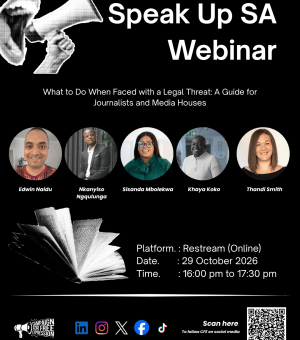
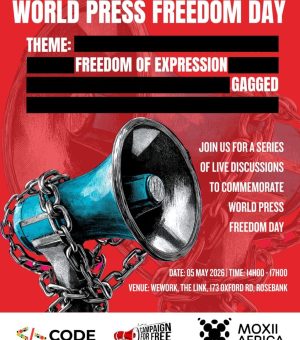
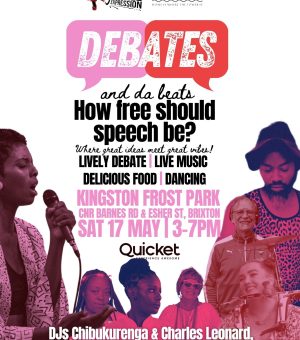


We Offer Legal Support to Journalists whose free expression is under attack
Campaign for Free Expression, working with Media Defence, is offering limited
legal support for Southern African journalists who are facing court action for their work. The journalist must be based in Southern Africa and their work must appear online.


Sign Up
To Follow US
Our newsletter will keep you abreast of developments that affect free expression.
